
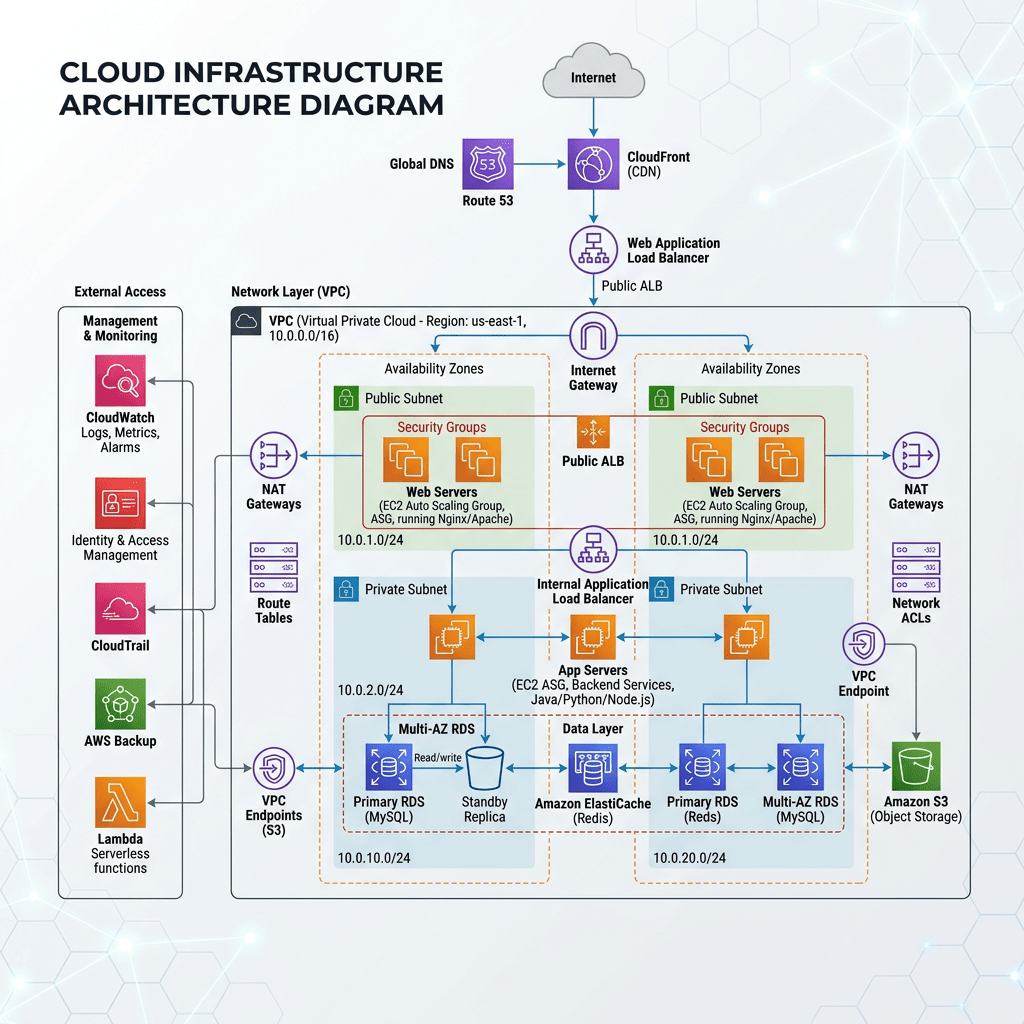
This week’s discussion centered on designing cloud architecture for a new e-commerce platform, and the concept that stayed with me most is one that seems simple on the surface: a well-architected system costs less over time than a poorly designed one.
Before working through this material, I think I would have assumed that good architecture was primarily about performance, handling more users, loading pages faster, staying available during peak traffic. Cost felt like a separate conversation. What this week clarified for me is that those things are deeply connected. Design decisions made at the architecture stage, whether to use IaaS, PaaS, or serverless, whether to separate concerns into distinct layers, whether to use auto-scaling versus fixed capacity, have direct financial consequences that compound over time.
A serverless approach, for example, charges only for actual usage rather than idle server time. For a new platform that hasn’t yet established consistent traffic patterns, that’s not just a technical choice, it’s a financial one. Similarly, keeping the application tier stateless and using a cache for frequently requested data reduces database load, which reduces the need for expensive database scaling. Good architecture and cost efficiency turn out to be the same conversation.
What I found most interesting is that this applies in the other direction too. Poorly designed systems accumulate what engineers call technical debt, shortcuts that seem cheap early on but become expensive to maintain, secure, and scale later. A database exposed to the public Internet, for example, is cheaper to set up initially but creates security vulnerabilities that can be catastrophic to remediate after the fact.
This week reinforced for me that systems analysis is fundamentally about thinking several steps ahead, understanding not just what a design does now, but what it will cost, require, and enable in the future.

Leave a Reply